What are Regular Summer Camps Like?
The majority of us attended regular summer camps as children. To keep children engaged during school breaks, they employ a range of activities, such as crafts and the arts, games and sports, music and dance, and seminars for the development of core skills.
These summer camps are often created with exposure and enjoyment in mind. They introduce children to a range of activities and assist them in discovering new interests. Safety is sometimes seen as a need rather than the top concern, even though many regular camps follow basic safety protocols.
What Are Safety Summer Camp Programs?
On the other hand, best safety summer camp programs are constructed with a greater purpose. Here, safety is the cornerstone rather than merely a list.
The best safety summer camp programs incorporate environmental, psychological, and physical safety into every facet of the program. Everything is thoughtfully organized to provide a safe atmosphere, from the way activities are created to the way employees engage with kids.
"Is this activity fun?" is not the only question these camps pose.
"Is this activity safe, supervised, and suitable for every child?" is another question they pose.
The Fundamental Distinction: Safety Approach
| Regular Camps |
Safety-Focused Camps |
| Safety measures are often basic and generalized |
Safety protocols are detailed and strictly implemented |
| Supervision may depend on staff availability |
Staff are trained specifically in child care and emergency handling |
| Focus is more on activity delivery |
Activities are designed with risk assessment in mind |
Staff Training and Supervision
The individuals in charge of your child are one of the most important distinctions between the two.
Regular Camps:
Staff members may be skilled in specific activities—like dance, art, or sports—but not all are trained in handling emergencies or child psychology.
Safety Summer Camp Programs:
Here, staff undergo specialized training, including:
- First aid and basic medical response
- Child behavior management
- Emergency preparedness
The staff-to-child ratio is often more controlled, ensuring that every child receives proper attention. For parents, this translates into something invaluable—peace of mind.
Activity Design: Fun vs Thoughtful Fun
Exciting activities are available at both kinds of camps, but they are organized very differently.
Regular Camps:
Activities are often designed to maximize participation and enjoyment. While they can be engaging, safety considerations may sometimes be secondary.
Safety-Focused Camps:
Every activity is evaluated for kid's age appropriateness, physical safety risks and emotional comfort levels.
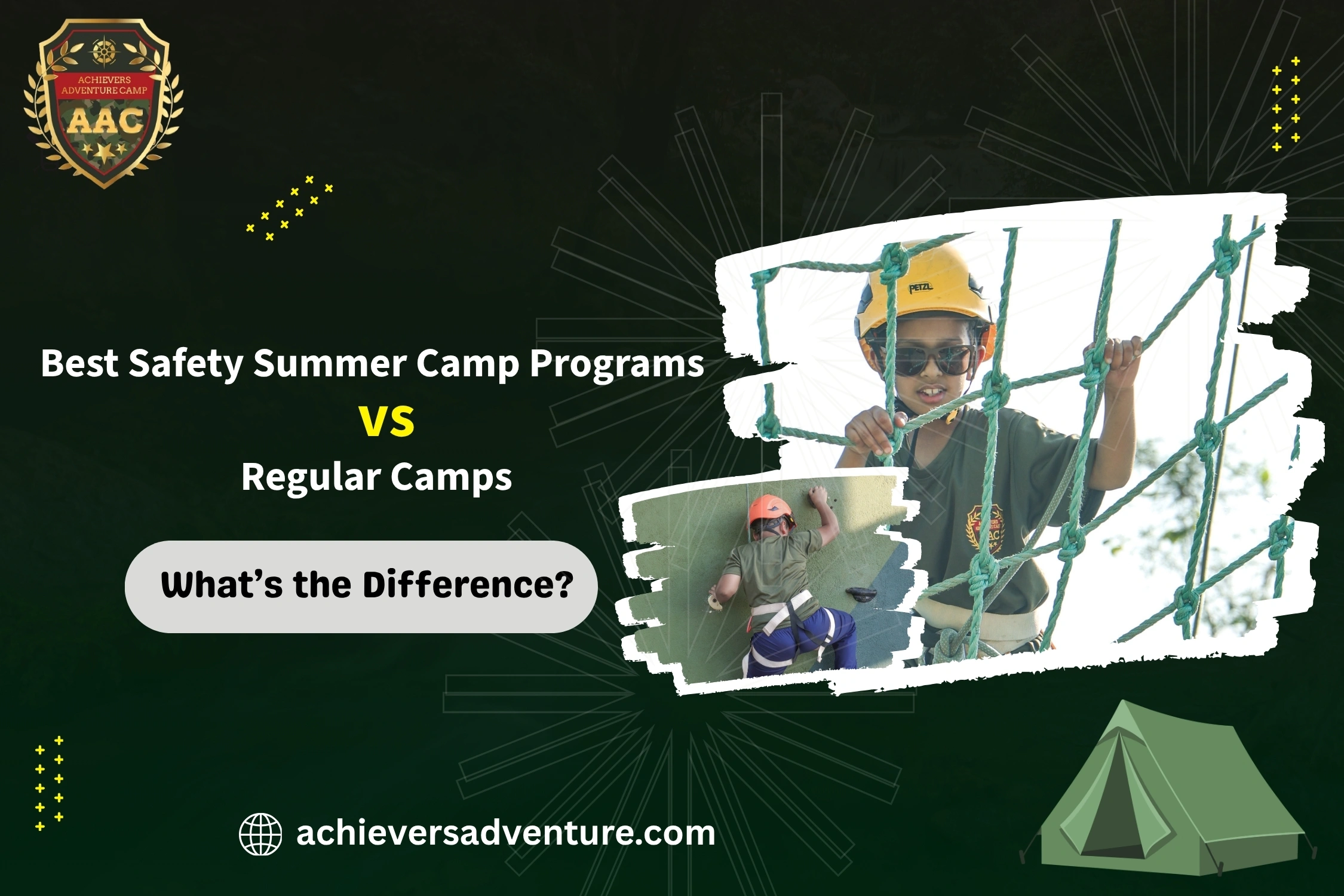
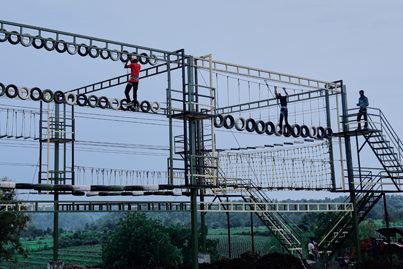
An adventure sport like rock climbing in a safety camp, for instance, will always require the right equipment, skilled supervision, and unambiguous instructions. It's about safe, controlled discovery, not just excitement.
Emotional Safety: The Often Overlooked Factor
One of the most important, yet underestimated, aspects of safety is emotional well-being.
Regular Camps:
Emotional safety may not always be a structured priority. Issues like bullying or peer pressure might be addressed reactively rather than proactively.
Safety Summer Camp Programs:
These camps actively create a supportive environment by encouraging inclusivity, monitoring group dynamics and training staff to identify signs of distress. Children are not just protected physically—they are made to feel heard, respected, and valued.
Health, Hygiene, and Environment
How can one compromise on health safety, it has become more important than ever!
Regular Camps:
Basic hygiene practices are usually followed, but systems may not be standardized.
Safety-Focused Camps:
Best safety summer camp programs implement strict hygiene protocols, regular sanitation of spaces and equipment, access to clean drinking water and nutritious food and clear procedures for handling illness. They also pay attention to environmental factors such as heat, ventilation, and crowd management.
Which One Should You Choose?
It is a very important question to ask before enrolling your children in the summer camp this vacation. Well, the answer depends on your priorities. It is very simple if you are looking for basic engagement and your child is already familiar with the environment, a regular camp may be sufficient. However, if you want a space where your child is closely supervised, emotionally supported and physically safe at all times then choosing one of the best safety summer camp programs could be a wiser decision.
How to Choose the Best Safety Summer Camp Programs? Final Thoughts
This comparison is based on the straightforward fact that not all camps are made equal. Regular camps provide entertainment and exposure, but safety-focused programs provide something more—a sense of security that enables kids to flourish.
Because children don't hold back when they feel protected. They take part more, express themselves freely, and confidently welcome new experiences.
And that's essentially what summer camps are supposed to be: a place where kids develop, explore, and make lifelong memories rather than just a means to kill time.
 Adventure
 April / 24 / 2026